Make an enquiry
Let us know your needs and we’ll be in touch shortly.


Check out all the latest updates, insights and advice from our expert team.
What if the best way to reduce workplace claims risk is to focus on everyday respect, not just policies? Building a workplace culture that prevents claims starts with how people treat one another, whether employees can raise concerns safely and how leaders respond when behaviour falls short.
Written rules alone cannot create a respectful workplace. Employees also need practical guidance, fair treatment and confidence that concerns will be heard. These everyday signals help create a culture where problems are more likely to be addressed before they escalate.
This article explains how respect shapes workplace culture and what employers can do to support it. You’ll learn how clear expectations, relevant training, open feedback and accountable leadership can help reduce risk, alongside the role of workplace policies and risk management in a UK business.
Practical training helps employees raise concerns, understand workplace policies and respond respectfully. Pair technical guidance with realistic conversations and clear examples.
Open communication helps employees share concerns and understand what is expected of them. Managers can support healthy dialogue by explaining workplace policies, listening without interruption and clarifying next steps. For example, a team meeting can explain how to report harmful behaviour and who will handle the concern. Shared expectations help employees feel connected to their purpose and workplace.
According to The National Archives (legislation.gov.uk), the UK Employment Rights Act 2025 outlines measures for preventing harassment and managing employees’ mental health.
UK employers should have clear grievance and disciplinary procedures, applied consistently and handled fairly. Employees need a straightforward way to raise concerns and understand how the process works.
The ACAS Code sets out principles for handling disciplinary and grievance cases. Employment tribunals may take the Code into account, so employers should document decisions and follow a fair process.
Potential employer costs include management time, legal advice, case preparation, and any settlement or compensation. The nature of the claim and how it is resolved affect its financial and operational impact.
Prevention means setting clear standards, teaching employees how to recognise harmful behaviour and responding consistently when concerns arise. Training should use relevant workplace examples, explain reporting routes and help managers practise listening without dismissing or blaming the person raising an issue. Leaders should review whether policies and learning opportunities are applied fairly. This makes expectations easier to understand and helps identify risks early.
When a grievance or misconduct complaint arises, acknowledge it, gather relevant information, hear from the people involved and record decisions. Communicate the outcome and next steps clearly, while treating sensitive information with care.
Regular employee surveys and exit interviews can reveal recurring concerns, such as unclear reporting routes or inconsistent treatment. Compare themes over time and follow up on specific issues rather than treating feedback as a one-off exercise.
To reduce the risk of unfair or wrongful dismissal claims, employers should explain concerns, give employees a fair opportunity to respond and keep a clear record of the process and decision.
A positive workplace culture is shaped by everyday decisions, shared expectations and how people treat one another. Building a workplace culture that prevents claims means making those expectations part of ordinary working life, not leaving them on a policy page.
A positive culture combines fairness, inclusion, open communication and a shared sense of purpose. These elements influence whether employees feel valued, connected and able to contribute. For example, managers can invite different perspectives during team discussions and explain how decisions are made. Employees who feel connected to their organisation’s culture are four times as likely to be engaged, and almost six times as likely to recommend it as a great place to work.
Workplace policies turn an organisation’s values into clear, consistent expectations. Policies covering equality, harassment, grievances and conduct can explain how to raise concerns, who responds and how decisions are recorded. An organisation-wide EDI statement and communicated strategy make commitments visible. Reviewing how learning and development opportunities are allocated can help identify inconsistent treatment and support fairer processes.
Useful records include current policies, training attendance, grievance correspondence, investigation notes and reasons for decisions. Keep survey themes and actions taken alongside these records so the organisation can understand how concerns were addressed. Clear, dated documentation helps explain what happened and why, while supporting consistency when similar issues arise.
Culture also affects retention and growth. Employees who feel a sense of belonging are three times more likely to look forward to work and five times more likely to want to stay long term. Use these findings to examine daily practice: whether managers invite feedback, recognise contributions fairly and address concerns consistently. Building a workplace culture that prevents claims also means making these habits part of everyday work across teams.
Considering workplace concerns alongside operational exposures gives organisations a broader view of risk; risk management consultancy can support that wider assessment.
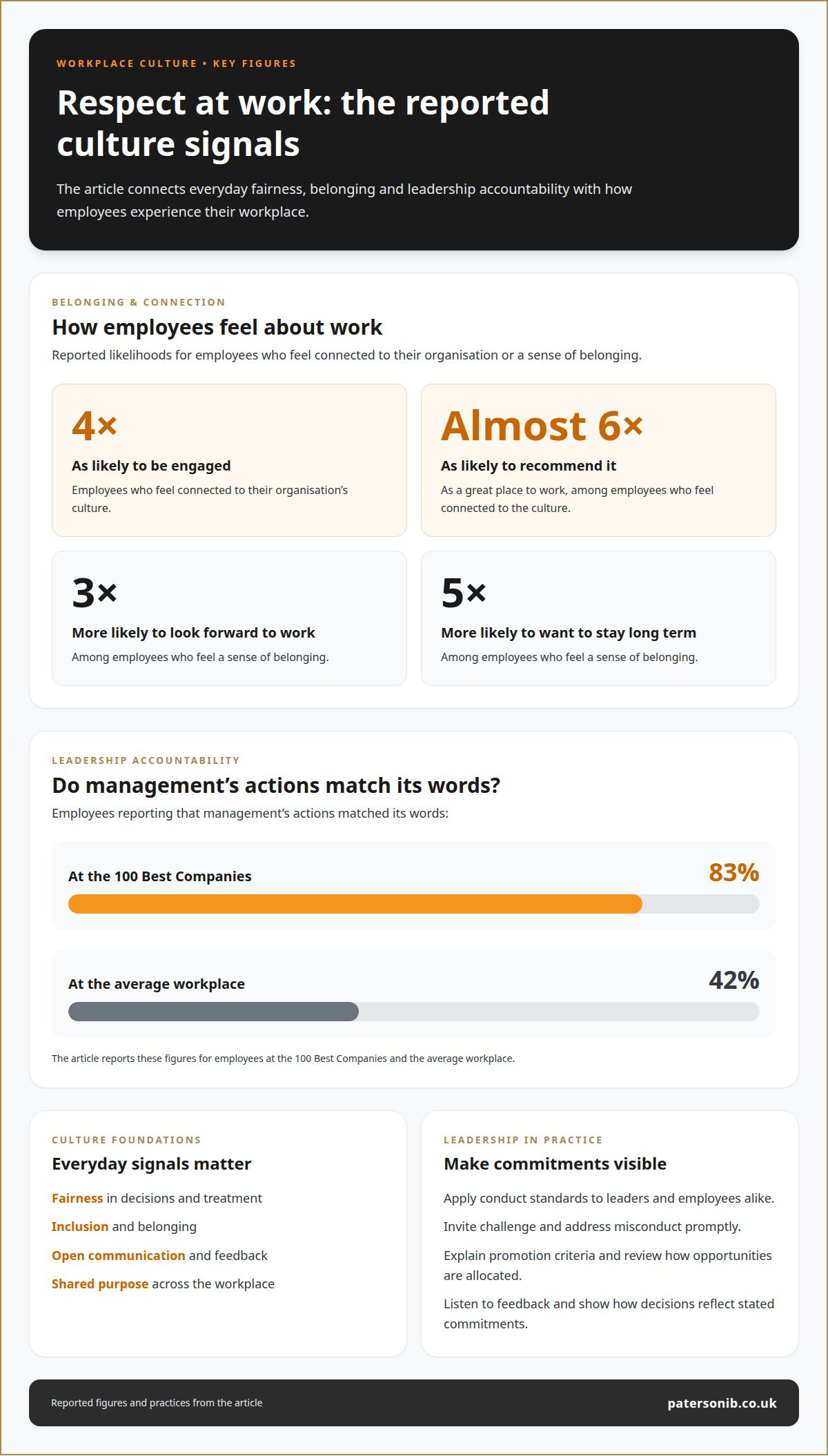
Leadership accountability means applying the same conduct standards to senior managers and the wider workforce. Employees compare daily decisions with stated values, especially when pressure rises. If a senior manager interrupts staff or excuses a favoured colleague, written policies lose force. A leader who invites challenge and addresses misconduct promptly makes expected practices visible. Consistency gives collaboration a practical foundation.
At the 100 Best Companies, 83% of employees said management’s actions matched its words, compared with 42% at the average workplace. Leaders can close this gap by aligning decisions with their commitments. For example, if they promise fair access to development, they can explain promotion criteria and review how opportunities are allocated. Clear reasoning helps employees understand how those commitments apply across teams.
Employees who say managers are honest and ethical are five times more likely to want to stay at their workplace long term, and 11 times more likely to think it is great. Leaders develop trust through specific habits: admit mistakes, explain decisions and apply standards consistently. These actions can support engagement and help retain talent, particularly when employees see the same principles reflected across departments.
Accountability also means responding when employees raise concerns. Leaders can review feedback, assign responsibility for follow-up and communicate what action will be taken. If a survey identifies uneven access to training, managers can examine allocation patterns and report the steps taken. Closing this loop shows that employee input can influence workplace practices and strengthen collaboration between leadership and staff.
Managers who create a safe environment for employees to express ideas and make suggestions can help foster innovation. Employees are 31 times more likely to think their workplace is a breeding ground for innovation in that environment. A quarterly culture review gives leaders a regular opportunity to examine feedback, identify recurring concerns and adjust their approach. Small, visible changes help turn stated values into everyday conduct.
Useful policies make expected conduct, reporting routes and follow-up clear. They work best when employees can understand them and managers apply them consistently.
A no-blame approach encourages employees to report errors or risks promptly, giving employers an opportunity to address issues before they escalate. It does not remove accountability. Instead, it distinguishes honest reporting from harmful conduct and helps staff raise concerns without fearing automatic blame.
Policies can support equality, diversity and inclusion through practical measures such as:
These measures are most useful when they shape everyday decisions. For example, reviewing who receives development opportunities can help identify inconsistent access. A clear harassment policy should explain how employees can raise concerns and how reports are handled. Grievance and disciplinary procedures should set out the stages, responsibilities and communication employees can expect.
Regular pulse surveys can gather views on employees’ work, the wider workplace and their sense of inclusion. Company-wide surveys can also offer an anonymous way to disclose grievances. Employers can group recurring themes, assign follow-up and communicate resulting changes. This process turns feedback into a practical review of workplace risks.
Policies should also address wellbeing. Promoting mental health resources, wellbeing initiatives and flexible work arrangements can help employees manage work-life boundaries. Their usefulness depends on whether staff know what support exists and managers apply arrangements consistently. Clear records of concerns, decisions and follow-up help show how policies work in practice.
Reviewing policies alongside feedback can reveal gaps between written standards and daily experience. Explore workplace risk management support to consider how broader risk practices fit your organisation.
Paterson Insurance Brokers helps businesses consider how workplace and operational risks fit within their wider insurance arrangements. Once respectful policies, training and leadership practices are in place, reviewing insurance can form part of a broader approach to business resilience. Suitable cover depends on the organisation’s activities and exposures, including its sector and day-to-day operations.
Paterson Insurance Brokers arranges tailored insurance for businesses in construction, agriculture, retail and wholesale, and manufacturing. Insurance does not replace fair procedures or prevent every workplace concern, but it can help address financial exposure when an insured event occurs. Consider reviewing your cover when operations change or you want to understand how it relates to your business risks.
Contact Paterson Insurance Brokers to discuss your business insurance needs.
Building a workplace culture that prevents claims takes steady attention beyond written policies. Make respectful conduct part of routine decisions, from how managers allocate opportunities to how teams respond when someone raises a concern. A consistent approach turns stated values into an everyday standard rather than a one-off initiative.
Review how your organisation’s risk arrangements support its wider operations as working practices and business needs change. Paterson Insurance Brokers offers Construction Insurance, Agriculture Insurance, and Retail & Wholesale Insurance, helping businesses consider cover in the context of their sector and activities. Insurance is one part of managing business risk; it does not replace fair workplace practices.
Contact Paterson Insurance Brokers to discuss your business insurance needs. Small, considered improvements can help make respect a lasting part of how your organisation works.
Respect shapes culture through everyday interactions, such as listening without interruption, sharing information fairly and disagreeing without personal attacks. These behaviours help colleagues work through differences before they affect cooperation. For example, a manager can invite quieter team members to contribute during a project review, then explain how their ideas were considered. Repeated actions like these make respect visible in routine work.
A no-blame culture encourages people to report mistakes and risks so the organisation can understand what happened and respond constructively. It does not mean overlooking responsibility for deliberate misconduct. For example, if a handover error causes a delay, a team can examine whether instructions or responsibilities were unclear, then improve the process. The aim is to learn from problems, not discourage people from raising them.
A clear mission and set of values help employees understand the organisation’s purpose and the standards expected in daily decisions. They are useful when teams face competing priorities. For instance, a stated commitment to fairness can guide how a manager allocates desirable shifts or development opportunities. Values become meaningful when leaders explain how they apply to real choices, rather than leaving them as slogans.
A good company culture gives employees a more consistent experience across teams and helps them understand how to work together. It can support engagement, collaboration and retention by making expectations and responsibilities clearer. For example, a new employee who receives a thoughtful induction, regular feedback and clear ways to ask for help can settle into their role more confidently. Culture also shapes how an organisation responds when problems arise.
Train managers to recognise harmful conduct, listen carefully, respond impartially and keep factual records of concerns and decisions. Scenario-based practice can help them handle situations such as repeated interruptions, disputed shift allocation or a complaint about a colleague. Training should clarify when a matter needs formal handling and give managers a way to discuss difficult cases and learn from how they were resolved.
Make reporting routes clear, offer more than one appropriate way to raise an issue and explain what happens after a report. Managers should acknowledge concerns calmly and avoid making assumptions before hearing relevant perspectives. For example, an employee who feels uncomfortable speaking to their direct manager should know the alternative route. Share appropriate updates about actions taken while protecting the privacy of those involved.
Let us know your needs and we’ll be in touch shortly.