Make an enquiry
Let us know your needs and we’ll be in touch shortly.


Check out all the latest updates, insights and advice from our expert team.
A policy gap can become a shareholder dispute when owners disagree about what the business should have insured, or who bears the loss when cover falls short. A practical approach to avoiding shareholder disputes over inadequate insurance cover is to agree responsibilities and decision-making processes in advance, then review whether the company’s policies match its risks.
An insurance coverage dispute may arise when an insurer declines, restricts or contests a claim under the policy wording. Clear communication about the company’s insurance needs and transparent financial reporting can help shareholders understand the decisions made and reduce misunderstandings.
This article explains how shareholder agreements and company governance can help prevent disputes, what to review in policy limits, exclusions and endorsements, and how to assess insurance needs. It also considers how insurance and risk management advice can support better-informed decisions.
For UK companies, clear governance makes insurance decisions and shareholder responsibilities easier to explain. Record who decides on cover, how disagreements will be handled and what happens if shareholders reach a deadlock.
When arranging insurance, directors must make decisions within their authority and consider the company’s interests, risks and ability to respond to a loss. The Companies Act 2006 also sets general duties concerning care, skill and diligence, and conflicts of interest. These duties matter because a recorded decision about cover can show how directors considered the company’s needs and competing interests.
Assessing insurance needs means identifying the business’s exposures, deciding who reviews them and recording the reasons for the cover selected. For example, a company can minute why it chose a particular policy limit and note the risks and exclusions considered. This gives shareholders a shared reference when reviewing funding, business changes or a later claim, instead of relying on conflicting recollections.
A UK shareholders’ agreement should assign responsibility for arranging and reviewing insurance, set out how shareholders approve significant cover decisions, and explain how disagreements proceed to dispute resolution. It can also define funding arrangements, including whether shareholders may be asked to lend money and what happens if someone cannot contribute. Clear terms help minority shareholders understand how decisions are made and reduce disputes about costs and risk.
Shareholders can agree a staged response to inadequate cover: raise the concern with the board, share relevant policy and financial records, then use negotiation or mediation. Section 994 of the Companies Act 2006 provides a route for a UK shareholder to petition over alleged unfair prejudice in the conduct of a company's affairs, according to UK legislation. A shareholder derivative claim in the UK is brought under Part 11 of the Companies Act 2006, according to UK legislation.
For a 50:50 company, an agreed independent chair or buy-sell process can offer a route through deadlock. Early discussion can clarify whether the issue concerns policy wording, a director’s decision or the company’s ability to fund additional protection.
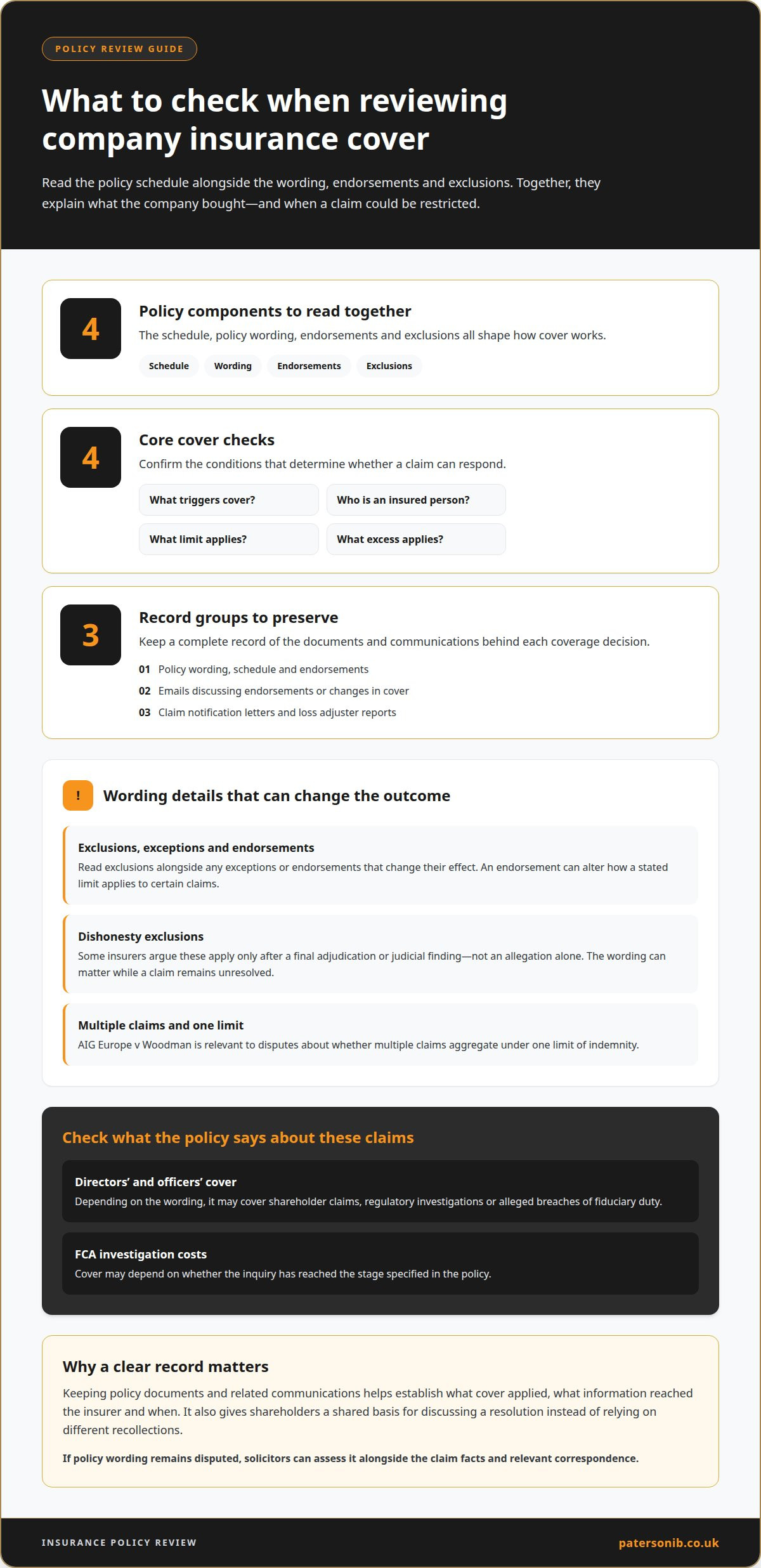
A policy schedule summarises the cover, while the wording, endorsements and exclusions explain how it works. Reviewing them together helps shareholders understand what the company bought and why a claim might be restricted. For example, a schedule may state a limit, while an endorsement changes how that limit applies to certain claims.
Start by checking what triggers cover, who qualifies as an insured person, the applicable limit and any excess. Then read exclusions alongside any exceptions or endorsements that change their effect. Directors’ and officers’ policies may cover shareholder claims, regulatory investigations or alleged breaches of fiduciary duty, depending on the wording. Cover for FCA investigation costs may also depend on whether the inquiry has reached the stage specified in the policy.
Pay close attention to dishonesty exclusions. Some insurers argue that these apply only after a final adjudication or judicial finding, not an allegation alone. This distinction can affect how directors and shareholders understand the company’s obligations while a claim remains unresolved. AIG Europe v Woodman is relevant to disputes about whether multiple claims aggregate under one limit of indemnity.
Keep a complete record of the documents and communications behind each coverage decision. If an issue arises, preserve:
These records help establish what cover applied, what information reached the insurer and when. They also give minority and majority shareholders a shared basis for discussing a resolution, rather than relying on different recollections. If the wording remains disputed, solicitors can assess it alongside the claim facts and relevant correspondence. This can clarify whether the disagreement concerns the scope of cover, notification or an exclusion before positions harden into litigation.
A UK company’s insurance needs depend on its activities, assets, contractual commitments and potential losses. A manufacturer may focus on machinery, stock and interruptions to production. A construction business may weigh site, equipment and liability risks differently. The key question is which loss could threaten operations or trigger disagreement between shareholders.
Property and business interruption cover address different parts of a loss. Property cover concerns insured physical assets, while business interruption cover can respond to lost income following an insured event, subject to the policy terms. The Financial Conduct Authority and UK Supreme Court guidance may inform how business interruption wording is interpreted. Companies should consider the insured event, indemnity period and exclusions together.
Other types of cover may be relevant, depending on the company’s work and risks:
These are examples, not a standard package for every UK company. A retailer with stock and customer-facing premises may face different risks from an agricultural business with seasonal operations. Contracts, location, equipment and reliance on particular suppliers can all affect which risks need attention. The policy wording determines how each type of cover responds.
Shareholders can reduce disagreements by agreeing how insurance decisions will be assessed, including which business risks to consider and why particular limits were selected. A written comparison of potential losses against policy terms can make trade-offs clearer. It also gives directors and shareholders a record to refer to when operations, assets or contracts change, helping them assess whether the existing cover still suits the company.
Start with a written risk register based on the company’s operations. Record key assets, services, staff, sites, suppliers and contractual commitments. For example, a manufacturer can note machinery dependencies, stock exposure and the consequences of production stopping. This gives directors a basis for assessing which losses could disrupt trading or affect shareholder value.
Assess each exposure by considering the event, its likely business impact and recovery time. Compare those scenarios with policy limits, exclusions and waiting periods. A retailer might consider whether premises damage could interrupt sales, while a professional firm could assess claims arising from its advice. This helps identify gaps and explain why particular cover matters.
Record the outcome in a dated document linking each risk to the decision made. Include:
Review the register when the business changes, such as opening a site, buying equipment, entering a new contract or changing its services. A new delivery arrangement, for example, could increase reliance on vehicles or a particular supplier. Recording the change, its insurance implications and the decision helps shareholders follow the reasoning over time.
Companies should also consider insurance when assessing funding and cost risks in shareholder litigation. A documented assessment can show how potential legal expenses relate to company resources and shareholder interests. Keep the risk register, relevant policy records and board decisions together so the rationale is accessible during a claim or disagreement.
Discuss a structured insurance needs review to help connect your company’s exposures with clear, documented decisions.
Paterson Insurance Brokers helps businesses review whether their insurance arrangements reflect their operations and risks. A review can be useful when activities change, shareholders disagree about the adequacy of existing cover, or policy decisions need a clearer business rationale.
Construction, agriculture, retail and manufacturing businesses, for example, face different exposures. Reviewing the company’s circumstances alongside policy terms can help directors identify where cover needs attention and explain their decisions to shareholders. Clear, advice-based guidance can support a more informed discussion, while governance agreements remain important for setting responsibilities and resolving disputes.
If you’re reviewing your company’s insurance needs or want to discuss its cover, make an enquiry with Paterson Insurance Brokers.
Treat insurance governance as an ongoing business decision, not a document review completed once and filed away. A new contract, site, product line or change in ownership can alter the company’s risks and shareholders’ expectations.
Agree when the board will review insurance and how it will communicate changes to shareholders. This creates a shared reference point before a claim or disagreement arises, keeping decisions connected to current operations rather than assumptions from earlier circumstances.
Paterson Insurance Brokers helps businesses arrange tailored cover, including Construction Insurance, Agriculture Insurance and Retail & Wholesale Insurance. A regular review can help avoid shareholder disputes over inadequate insurance cover.
To discuss your company’s insurance needs, speak with Paterson Insurance Brokers.
An insurance coverage dispute concerns whether a policy responds to a particular claim or how its terms apply. For example, a company may consider damage covered while its insurer relies on an exclusion or limit. Shareholders may then disagree about the original insurance decision, the insurer’s response or the financial consequences for the business. These are related but distinct disputes.
Shareholders should agree in the company’s governance documents which insurance decisions require their approval and which remain with directors. For a major renewal or material change, directors can circulate a decision paper explaining the risks, options and financial implications. Record the approval, any declared conflicts and the reasons for the decision. Set a review trigger for significant changes to the company’s activities or ownership.
Record the company’s key assets and compare relevant policy limits with the risks and potential losses they represent. Review the cover when assets or operations change.
Let us know your needs and we’ll be in touch shortly.