Make an enquiry
Let us know your needs and we’ll be in touch shortly.


Check out all the latest updates, insights and advice from our expert team.
A company’s limited liability does not remove the personal risks of making decisions as a director. Directors and officers insurance for private limited companies is not legally required in the UK, but it can help protect directors’ personal assets by covering legal defence costs and certain claims arising from their management duties. For startups and SMEs, the question is less about company size than who may challenge a decision and what financial impact a claim could have.
It’s understandable to ask whether this cover is necessary when a business is privately owned and still growing. This article explains why smaller companies buy D&O insurance, what protection it may provide and where it stops. It also outlines exclusions to examine, including fraud, known claims and uninsurable fines, so you can weigh the protection a policy offers against the risks it leaves with directors.
A decision about hiring, training or company finances can expose directors to a claim. D&O cover may help with the personal legal consequences of alleged management mistakes.
Directors’ and officers’ insurance can cover an individual’s legal liability for alleged wrongful acts. Depending on the policy, it may pay defence costs, settlements and damages arising from claims of mismanagement, negligence or breach of duty. Corporate legal liability cover may also protect a private company against specified claims made against the company itself. This can matter when a shareholder alleges that board decisions caused financial loss. D&O cover is distinct from general liability insurance, which addresses different risks.
The distinction from professional indemnity insurance is the type of alleged wrongdoing: D&O usually concerns management decisions, while professional indemnity responds to claims arising from professional advice or services. For example, an alleged breach of duty by a director differs from a client’s claim that incorrect advice caused financial loss.
Regulatory investigation cover may pay certain legal representation and investigation costs when a regulator examines a company or its directors. For a regulated startup, an inquiry into financial reporting could require directors to respond and seek legal advice. Policy terms matter: investigation cover may have limits or sub-limits, particularly for companies regulated by the Financial Conduct Authority (FCA). Some policies may also cover defence costs in certain regulatory or criminal proceedings, subject to their wording.
For a UK D&O quote, insurers generally need details about the company’s activities, financial position, directors and officers, regulatory status, and claims history. This information helps insurers assess exposures and consider suitable terms. Regulated activities and previous claims can be especially relevant.
Directors can face personal liability under the Health and Safety at Work etc. Act 1974, according to the UK legislation register. D&O protection can also matter when appointing a non-executive director, who may face allegations about decisions made while serving on the board. Clear cover for legal defence costs can help the company explain how it addresses that personal exposure when discussing a board appointment.
Directors and officers insurance for private limited companies isn’t legally required in the UK. Whether it’s worthwhile depends on the company’s activities, board responsibilities and who could challenge its decisions.
D&O cover may pay legal costs for covered claims and certain regulatory investigations. These costs can arise before it is established whether a director acted wrongly, so policy wording and reporting conditions matter. For example, a regulator’s inquiry into company reporting may require legal representation before formal proceedings begin.
Regulatory investigations, employment claims and shareholder disputes may be covered, subject to the policy’s exclusions, limits and terms. At renewal, review the indemnity limit, excess and claims-made conditions. If a claim arises, report it as the policy requires.
Shareholders, creditors, employees, investors, customers and regulators may all have an interest in a company’s decisions. A creditor might allege that directors continued trading despite financial difficulties, while an employee could challenge a leadership decision. These examples show why even a small board can face varied claims. Investment, borrowing and employment relationships can each affect the company’s exposure.
D&O insurance primarily protects directors and officers, not every claim against the company. Some policies include corporate legal liability cover for specified claims against the business. This distinction matters when a dispute names both the company and an individual director: the insured parties and entity provisions determine which losses may be covered.
Company size, turnover, industry and claims history help shape underwriting and policy limits. Limits are generally linked to turnover and historical claims data. When renewing directors and officers insurance for private limited companies, assess changes to the business, board and claims record alongside the existing limit and excess.
Review D&O cover for your business as its risks or responsibilities change.
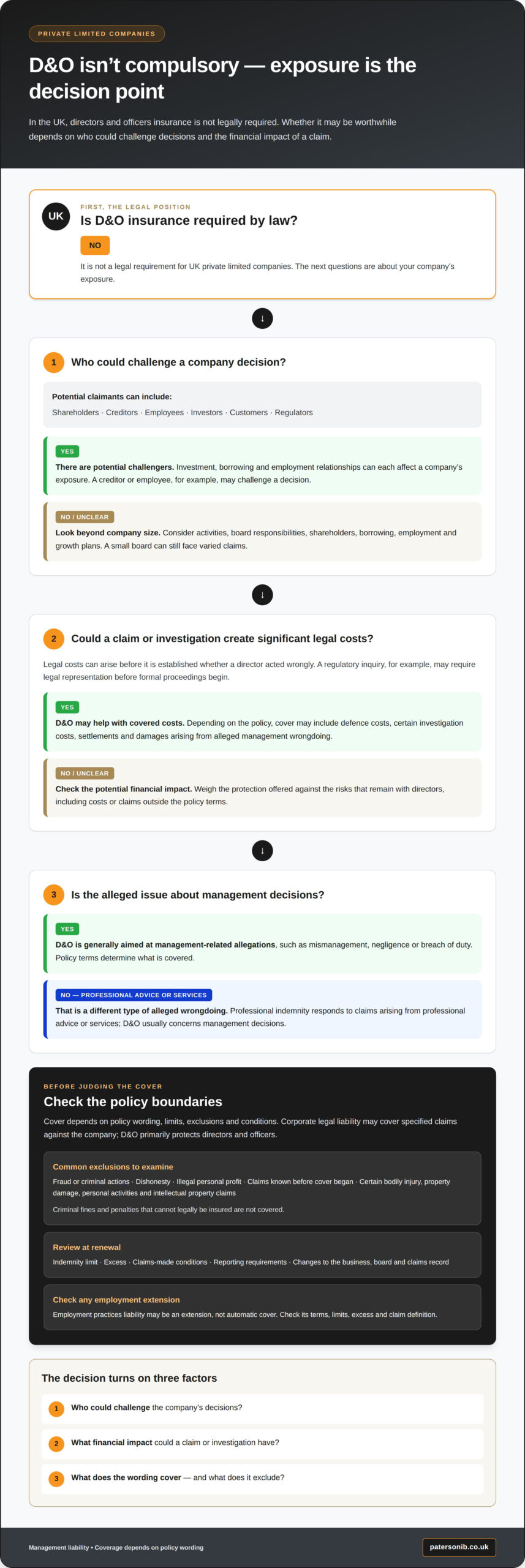
D&O insurance has defined limits, exclusions and conditions, so cover depends on the policy wording. A claim alleging fraud, for example, may be treated differently from an allegation of negligent management.
Common exclusions include deliberate fraud or criminal actions, dishonesty, illegal personal profit and claims known before cover began. Policies may also exclude bodily injury, property damage, personal activities outside company duties and intellectual property breaches. Criminal fines and penalties that cannot legally be insured aren’t covered. These exclusions distinguish alleged wrongful actions from losses a policy may respond to.
Employment practices liability may be available as an extension rather than included automatically. It may address certain employment-related claims, such as allegations of unfair dismissal or discrimination, subject to its own terms and limits. Review whether the extension applies, what excess it carries and whether the claim falls within its definition. An extension doesn’t remove other policy exclusions.
The indemnity limit should reflect the company’s turnover, activities, board and potential claims exposure. Limits are generally linked to turnover and historical claims data. Consider how one serious claim could use the available limit, including defence costs, settlements and other covered loss. The company typically arranges and pays for the policy, while the wording sets out when its directors can benefit.
An insurance broker can help arrange cover by assessing the company’s exposures, presenting suitable terms and explaining limits, exclusions and claims-made conditions. Before placement, the company provides information about its activities, finances, directors and claims history. The broker can then support a decision on the proposed cover and arrange the policy after approval.
For UK D&O policies, review the indemnity limit, excess, exclusions and claims-made terms together. These details show how alleged actions, prior knowledge and reporting requirements may affect a claim. The policy wording determines the precise scope of protection.
For a startup, even a small board can carry substantial responsibility. A decision about hiring, cash flow or a client contract may later prompt allegations of wrongful acts or breaches of directors’ duties. D&O insurance may help fund a defence against covered claims, keeping the cost of responding to an allegation distinct from everyday operating expenses.
Growth can widen that exposure. Outside shareholders, employees, borrowing and investor involvement can bring more parties into board decisions. For example, an investor who believes mismanagement caused financial loss may challenge directors personally. Company size alone doesn’t reveal this risk: relationships, responsibilities and decisions matter too.
Investment can also make cover a practical part of fundraising. Investors typically require UK startups to have between £1 million and £2 million of D&O insurance, depending on the size of the board. That expectation gives founders a reason to consider cover while preparing for investment discussions, rather than waiting until a transaction is underway.
Cover may also support recruitment. A prospective non-executive director could weigh personal exposure before joining a young company’s board. Explaining the D&O arrangements can help address that concern, although the policy terms determine what protection applies to the appointment.
SMEs can have different needs from larger businesses. D&O cover may be tailored for smaller companies with lower limits and retentions. The appropriate structure depends on factors such as turnover, board responsibilities, regulatory exposure and claims history. A regulated startup, for example, may face different management risks from a business without those responsibilities.
The key takeaway: assess who could challenge decisions, what directors do and whether investment or growth changes the picture. D&O insurance may address personal liability for covered alleged wrongful acts, but it won’t protect against every loss or excluded action.
Discuss D&O protection for your business as your board, funding or responsibilities evolve.
Paterson Insurance Brokers arranges Directors & Officers Liability cover for businesses assessing the personal risks attached to board decisions. It may be a useful next step when a company brings in investors, appoints directors or non-executive directors, or takes on new responsibilities. Cover should reflect the company’s activities, leadership structure and potential exposure, including the exclusions and claims-made terms discussed above.
Paterson Insurance Brokers is an independent brokerage providing tailored insurance and risk management solutions for businesses across the UK. Its advice-based approach can help clarify how D&O protection fits the company’s circumstances and which policy details matter. Make an enquiry to discuss your business’s Directors & Officers Liability needs.
As your company develops, revisit how board responsibilities and business plans affect the protection directors need. Directors and officers insurance for private limited companies should be considered alongside leadership decisions, not treated as a one-off purchase. A change in ownership, a new appointment or a shift in operations can be a useful prompt to reassess whether the arrangements still fit.
That review can also consider the wider business picture. Paterson Insurance Brokers offers Construction Insurance, Agriculture Insurance and Retail & Wholesale Insurance, alongside Directors & Officers Liability. Businesses with different operational exposures can consider their insurance needs in context, rather than viewing board risks in isolation.
If you’re considering cover or reviewing an existing arrangement, contact Paterson Insurance Brokers to discuss the next step. A considered conversation can help you approach your company’s risks with greater clarity and confidence.
D&O cover generally excludes deliberate fraud, dishonesty and criminal acts, as well as criminal fines that cannot legally be insured. A claim known before cover starts may also fall outside protection. For example, a director can’t assume a new policy will cover an existing dispute. Review the wording for exclusions involving personal profit, property damage and activities outside company duties.
A D&O policy doesn’t itself require a company to indemnify its directors. Whether the company must or can provide an indemnity depends on its governing documents and applicable company law. If the company does indemnify an insured person for covered costs, D&O insurance may reimburse the company, subject to the policy terms. The policy and company arrangements serve distinct purposes.
Holding roles across several businesses doesn’t automatically mean every role is covered under one policy. Disclose each company and directorship when arranging cover, so the insurer can assess which entities and individuals the policy will insure. For example, a director serving two separate companies should establish whether both are named or otherwise included in the policy wording.
No. D&O cover concerns an insured person’s management role, not simply their shareholding. Directors, officers and some managers may be insured under a policy’s definitions, whether or not they own shares. A finance director without shares, for instance, could face allegations about a reporting decision. The policy wording identifies eligible roles and the circumstances in which cover applies.
For company-wide cover, the business typically arranges the policy and pays its premium as a company expense. Payment methods and timing depend on the insurer’s billing arrangements and the terms agreed when cover is placed. Directors should understand who is arranging payment and ensure the policy remains in force, since a lapse can affect protection for future claims.
Many UK D&O policies operate on a claims-made basis: the claim must be made during the policy period, subject to its reporting conditions. For example, an allegation about decisions made during a former director’s tenure may still be relevant if the claim arrives during the active period. The insurer assesses it against the insured roles, policy limit, exclusions and terms.
Let us know your needs and we’ll be in touch shortly.