Make an enquiry
Let us know your needs and we’ll be in touch shortly.


Check out all the latest updates, insights and advice from our expert team.
A safety policy alone won’t show insurers how safety works in practice. To demonstrate a positive safety culture to insurers, provide evidence of role-specific training, visible leadership, shared reporting and hazard correction, and resources for safe working. The clearest picture comes from showing how these measures are part of everyday operations, not just written procedures.
It’s understandable to focus on incident records when preparing for an insurance conversation. But a constructive safety culture also shows how your business works to prevent harm, learn from near misses and give employees a voice in managing risk.
This guide explains practical steps for making that work visible, from keeping training relevant to giving teams the tools and budget to follow safe procedures. You’ll also see how to bring those details together into a clear account of your approach.
Make safe conduct visible in daily decisions, not just written procedures. How employees’ concerns are handled also shows whether safety is genuinely shared.
Model the standards you expect: managers should follow site procedures, use protective equipment and address unsafe practices consistently. Recognise employees and teams who identify risks or improve working methods, so safe choices receive attention alongside production targets. Accident rates, near-miss reports and claims history can inform an insurer’s view of risk. Their effect on premiums depends on the insurer’s assessment of the business and cover sought.
Give employees a clear way to report hazards, near misses, injuries and first-aid needs. Explain who receives each report, how urgent issues are escalated and how workers can raise concerns without fear of blame. For example, someone who spots a damaged access route should know how to flag it before anyone is injured. Review reports for recurring concerns, then share what action followed.
Involve the people doing the work when reviewing risk assessments and developing procedures or job safety analyses. Ask employees to describe practical difficulties, such as carrying materials through a busy work area, then consider whether existing controls work in real conditions. Record the concern, the decision and any changes made. This documents employee input and helps keep procedures grounded in actual tasks.
If you’re reviewing how workplace practices connect with business risks, risk management consultancy can help inform that discussion.
Enable reports of near misses, injuries and first-aid needs. Involve employees in risk and safety decisions, and welcome concerns without blame. Managers should model expected behaviours, stay visible and recognise employees and teams who contribute to safety.
Make hazard control a shared process, from reporting through to checking completed actions. Clear records help show how your workplace responds to risks.
Set up accessible ways for workers to report hazards and near misses, including an anonymous option where appropriate. Explain how to submit a report, who reviews it and how to raise urgent dangers immediately. For example, a worker who notices an unstable stack should know how to flag it before nearby work continues. Avoid treating reports as evidence of individual failure; use them to identify unsafe conditions and behaviours.
Log each reported hazard with its location, risk, assigned action and current status. Record who is responsible and what evidence confirms the correction, such as a maintenance record or follow-up inspection. If a damaged guard remains unresolved, document interim controls and escalation. Review open actions regularly so hazards don’t disappear from view when attention shifts to other work.
Use inspections to assess site conditions, including access routes, equipment, housekeeping and protective measures relevant to the work. A safety audit can then examine whether procedures are followed and records reflect actual practice. Record findings, responsible people and corrective actions. For example, compare a storage procedure with how materials are arranged, then follow up on any gap.
Prepare a concise report combining incident outcomes with evidence of prevention, such as hazards raised, actions completed, inspection findings and overdue corrections. Explain what each measure shows and what changed in response. Assess the quality of indicators, not just the numbers recorded. This gives insurers context: a rise in near-miss reports may reflect stronger reporting, so describe the trend alongside the corrective action taken.
Turn your safety policy into a workable plan by matching resources to the hazards employees face. A budget that supports safe methods helps prevent pressure to take shortcuts.
For support connecting workplace risks with practical controls, explore risk management consultancy.
Paterson Insurance Brokers helps construction businesses consider how their insurance arrangements relate to the risks they manage on site. Construction Insurance is relevant when reviewing cover alongside safety procedures, resources and day-to-day work. Clear records of training, hazard controls and safety investment can help explain your approach to risk during an insurance discussion.
Bring together details of your activities, sites and risk controls before reviewing your requirements. This gives the conversation a practical foundation and helps connect your construction operations with relevant insurance considerations. Paterson Insurance Brokers also provides risk management consultancy for businesses seeking support with operational safety.
Contact Paterson Insurance Brokers to discuss your construction insurance needs.
Use your next insurance review to connect your safety approach with the realities of your business. To demonstrate a positive safety culture to insurers, show how your decisions, resources and everyday practices work together, and where you’re continuing to improve.
Paterson Insurance Brokers discusses insurance needs across construction, agriculture, and retail and wholesale businesses. For construction firms, a conversation about Construction Insurance can sit alongside a clear account of site activities and risk management. The aim is to reflect your operations in the insurance discussion, rather than treating safety records as paperwork in isolation.
Bring your current priorities and questions to the conversation. Contact Paterson Insurance Brokers to discuss your business insurance needs and take a considered next step.
Insurers may look for evidence that safety processes operate consistently across the business. To demonstrate a positive safety culture to insurers, connect oversight with practical decisions and records. For example, show how information from a worksite reached management and led to an operational change. A concise account of who reviewed the issue, what changed and how teams were informed makes the evidence clear.
Show senior managers taking part in safety discussions and responding to employee input. Meeting records can note decisions, responsibilities and follow-up, while worker feedback can show how operational experience shaped those decisions. For example, if staff report that a work sequence creates practical difficulties, document the discussion and explain whether the process changed. This demonstrates involvement through actions, not statements alone.
Present improvements as a clear account of the issue, response and outcome. A practical explanation of how to demonstrate a positive safety culture to insurers can include the original concern, the change made, who completed it and how the business assessed whether it worked. If a control needed adjustment after implementation, include that learning too. A concise, factual record helps insurers understand progress and follow-through.
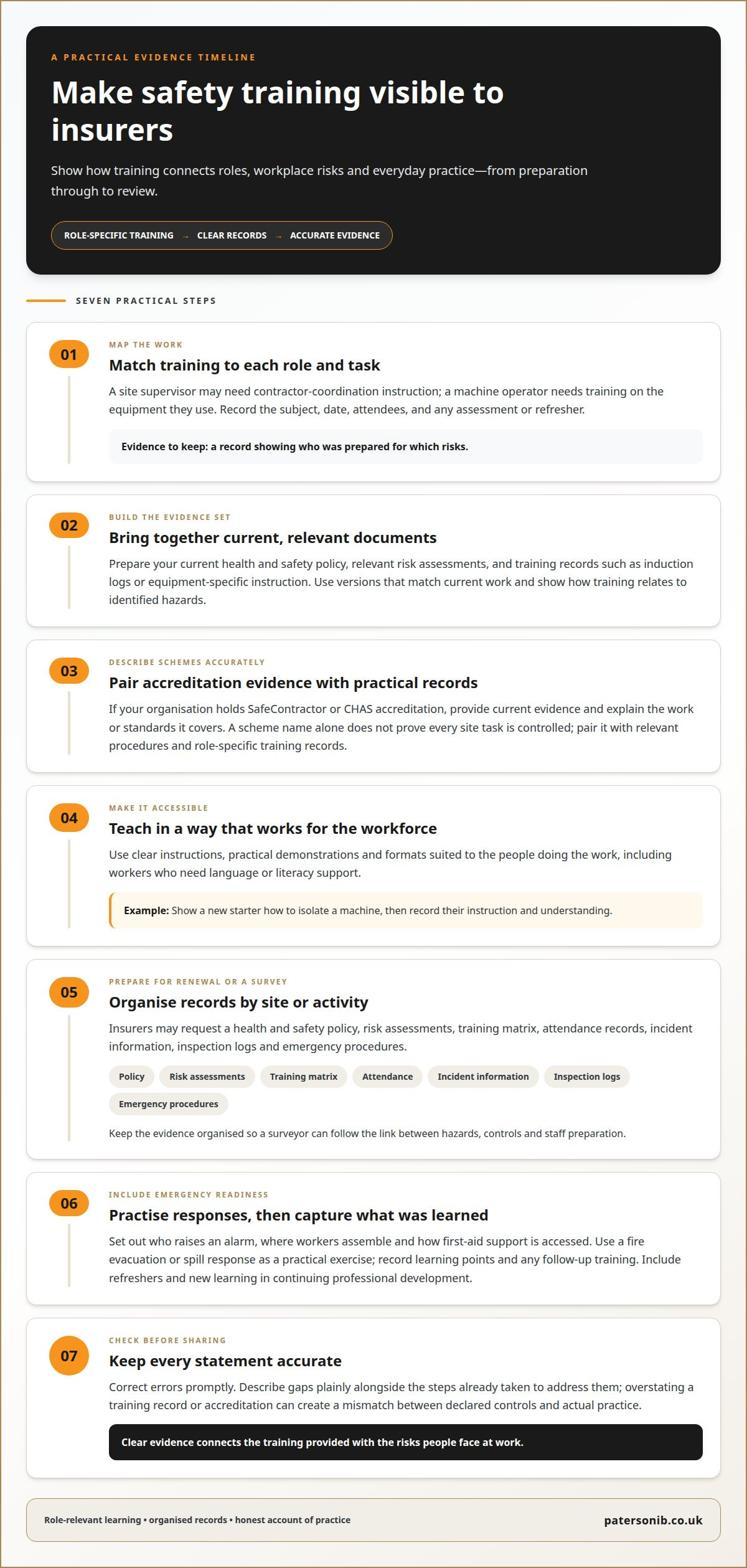
If your organisation holds SafeContractor or CHAS accreditation, provide current evidence and explain the work or standards it covers. Pair it with role-specific training records and relevant procedures; accreditation alone does not prove every site task is controlled.
Let us know your needs and we’ll be in touch shortly.