Make an enquiry
Let us know your needs and we’ll be in touch shortly.


Check out all the latest updates, insights and advice from our expert team.
A property’s environmental risk may come from contamination it inherits, not just an incident it causes. Environmental cleanup costs insurance, usually arranged as Environmental Impairment Liability cover, can help pay for clean-up and remediation after pollution, as well as legal defence costs. It doesn’t cover fines.
For property owners and contractors, the concern is understandable: pollution can develop gradually, be difficult to trace and prove costly to remediate. Standard liability cover may leave gaps. Environmental cleanup costs insurance can address certain first-party and third-party liabilities, depending on the policy and circumstances.
This guide explains what Environmental Impairment Liability (EIL) cover may include, how it differs from other pollution-related insurance, and why historic contamination, tenant activity and site operations matter. It also outlines environmental risks to consider when assessing commercial property and contractor exposures.
Environmental cleanup costs insurance, often arranged as Environmental Impairment Liability (EIL), may cover eligible pollution remediation and legal defence costs. The policy wording defines the scope of cover, and fines are not covered.
General liability and property policies may leave gaps for gradual contamination and clean-up costs at the insured’s own site. Public liability would normally cover a sudden, one-off pollution incident, but not gradual pollution. When comparing UK policies, check which sites are covered, how clean-up and defence costs are treated, and what exclusions and reporting terms apply. A leaking tank, for example, can create different liabilities from a single spill.
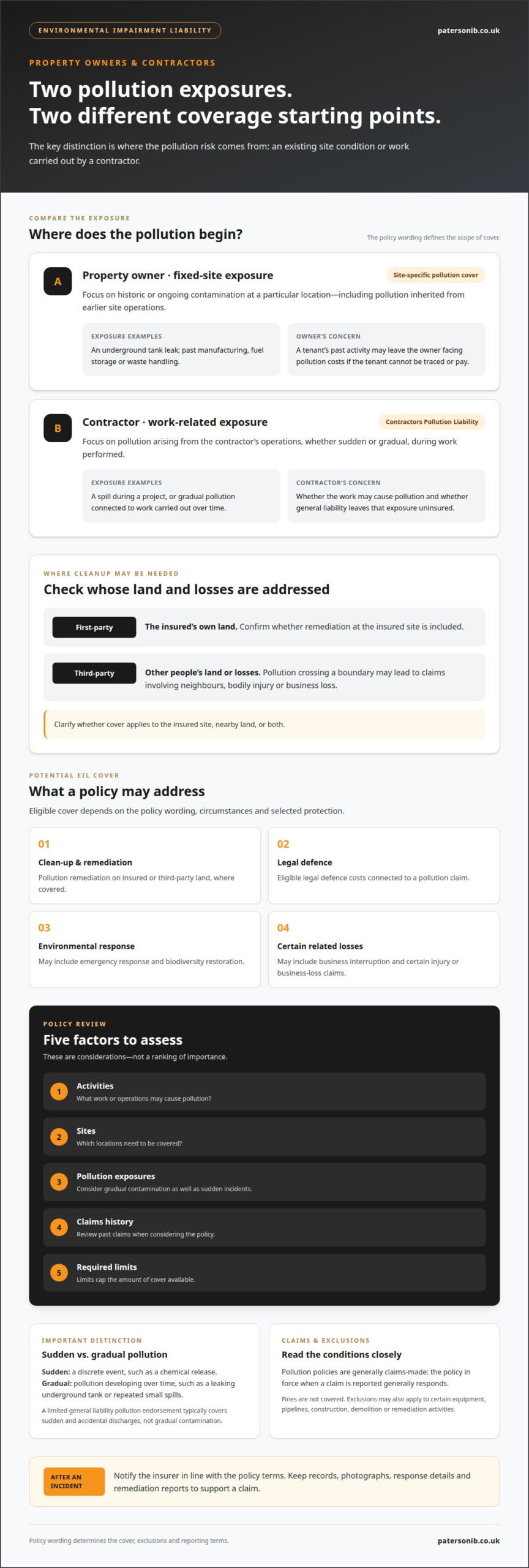
Gradual pollution develops over time, such as contamination from a leaking underground tank or repeated small spills. Sudden accidental pollution follows a discrete event, such as a chemical release. EIL may address both, including pollution linked to past or current operations for which the insured retains legal liability. This distinction helps contractors and site operators identify exposures that general liability cover may leave uninsured.
When comparing environmental cleanup costs insurance, consider your activities, sites, pollution exposures, claims history and required limits. EIL may cover clean-up on the insured’s land and third-party land, biodiversity restoration, emergency response, business interruption, and certain injury or business-loss claims. A commercial general liability pollution endorsement may be narrower: a limited buyback typically covers sudden and accidental discharges, not gradual contamination. The premium depends on these risk factors and is set out in a quote for your circumstances.
Policy limits cap the cover available, while exclusions specify losses the insurer will not cover. Exclusions can include fines and, under some policies, losses involving underground resources equipment, pipelines, or construction, demolition and remediation activities. Pollution policies are generally claims-made, so the policy in force when a claim is reported generally responds. After an incident, notify the insurer in line with the policy terms and keep records, photographs, response details and remediation reports to support your claim.
Property owners and contractors face different environmental exposures, from contamination at a fixed site to pollution caused during work. The appropriate cover depends on who is responsible and where remediation is needed.
First-party cover addresses clean-up costs on the insured’s own land. Third-party cover responds to certain claims involving other people’s land or losses. This distinction matters if pollution crosses a boundary or affects a neighbour’s property. A policy may also cover third-party bodily injury or business loss. For gradual contamination, clarify whether remediation applies to the insured site, nearby land, or both.
Site-specific pollution cover is designed around conditions at a fixed location. Contractors Pollution Liability, by contrast, addresses pollution arising from contractors’ operations. This distinction helps owners separate historic or ongoing site contamination from risks created by construction work. An underground tank, for example, may present a site exposure, while a spill during a project relates to operations. Industry endorsements can tailor cover to activities and locations, with the policy wording defining its scope.
The Environmental Damage Regulation 2009 applies to activities that may cause imminent threats of environmental damage in the UK. Environmental Impairment Liability insurance itself isn’t a legal requirement for businesses. Environmental remediation cover can address complementary and compensatory remediation required under the regulation. Policy wording also matters where third-party cover relates to environmental laws and requirements of EEA government or statutory bodies.
Businesses handling chemicals, fuel, waste or contaminated materials may face pollution exposures; so may property owners with a tenant’s past operations. A responsible tenant may be untraceable or unable to pay, leaving the owner exposed to pollution damage costs. Contractors can consider how their work might cause gradual or sudden pollution, while owners can assess site history and nearby land. For contractors, construction insurance can form part of a broader review of project risks.
The Environmental Protection Act 1990 introduced the polluter pays principle in the UK, making polluters legally liable for environmental damage, according to the UK legislation register. For commercial property owners, this means responsibility can involve pollution linked to earlier operations. Manufacturing, fuel storage or waste handling may have affected the ground before a current owner acquired the site. Ownership alone doesn’t show who caused contamination, but it can leave important liability questions to resolve.
Environmental risks can also arise from a sudden incident. Firewater from an electric vehicle fire in a car park can leach heavy metals into the ground, potentially prompting investigation and remediation. A pollution investigation may also lead a regulator to suspend a site’s operating permit. This can interrupt operations and result in lost rental income or relocation expenses. Consider property liability insurance alongside the financial impact of a site investigation, not only physical damage to buildings.
A shooting estate in Durham was found to have damaged over 4,000 square metres of a Site of Special Scientific Interest. This example shows how environmental harm can involve both regulatory action and legal expenses. Fines are distinct from insured remediation or defence costs, so owners should understand what their policy covers and excludes before an incident occurs.
Risk management can help owners identify exposures before they disrupt a property’s use. Review available site records, past operations and storage arrangements, including tanks and chemicals. Note nearby sensitive land or water that pollution could affect. If an investigation begins, preserve relevant records and document actions taken to contain or assess contamination. These steps help clarify what happened, who was involved and which environmental cover may respond. They also support informed decisions about future site operations and related liabilities.
Environmental liability insurance is worth considering wherever business activity could contaminate land, water or neighbouring property. Exposure depends on materials, processes and site history, not simply the industry label. A small business storing fuel, for example, may face different pollution risks from an office-based firm. The cover is not a legal requirement for businesses, but it can address liabilities that ordinary policies may leave exposed.
Chemical manufacturers, fuel distributors and waste handlers can face pollution risks through storage, processing or transport. A tank leak may gradually contaminate the ground, while a fire at a manufacturing site can send polluted runoff beyond the boundary. Construction and remediation contractors also face operational exposures when work disturbs contaminated soil or involves hazardous materials. Cover should reflect the work performed and the locations involved.
Commercial property owners should consider environmental cover even when tenants operate the site. Pollution may be discovered years after it began, and a business may be held responsible for historical contamination after buying land. If a tenant that caused pollution cannot be traced or cannot pay, the owner may face claims for damage costs. Industrial premises, former fuel depots and sites with underground tanks warrant particular attention to past use.
Businesses can assess their exposure by mapping where pollutants are stored, used or released. An agricultural operation might review fuel, chemicals and waste handling; a retailer with vehicle storage could consider spills or firewater reaching drains. Include site records, contractor activities and nearby sensitive land in your risk management review. These details help establish whether pollution could affect only the business’s premises or also neighbouring owners and the wider environment.
For a practical review of how pollution exposures relate to your business activities, discuss your business insurance needs.
Paterson Insurance Brokers helps construction businesses consider how insurance fits their project risks, including work that may disturb contaminated land. Construction Insurance supports a broader review of exposures such as site operations, contractors and materials. Environmental liability is a separate consideration, so assess pollution risks alongside the project’s other insurance needs rather than assuming one policy covers every clean-up cost.
This is particularly relevant for contractors working on previously developed sites, handling fuel or chemicals, or undertaking work near sensitive land or water. Discussing the project, locations and activities can help identify where cover needs closer attention. Contact Paterson Insurance Brokers to discuss your construction insurance needs or visit patersonib.co.uk.
Use your next insurance review to consider how changes in sites, tenants, materials or contracts could alter your environmental exposures. Keeping relevant site and operational records together can make the discussion more focused. Environmental cleanup costs insurance is one consideration, but it should sit within a wider review of your business risks and existing cover.
Paterson Insurance Brokers offers Construction Insurance, Agriculture Insurance and Retail & Wholesale Insurance for businesses in these sectors. These services can support a broader insurance review alongside consideration of pollution-related risks, without assuming one policy covers every exposure. Discuss how your activities and property risks fit together with Paterson Insurance Brokers.
Contact Paterson Insurance Brokers to discuss your business insurance needs. A considered review can help you approach environmental risks with greater clarity and confidence.
You may face liability for historical contamination even if you bought the land after pollution began. Responsibility depends on the circumstances, including who caused the damage and whether a former operator or tenant can be traced and pay. Before buying or leasing a site, review available environmental records and previous uses, such as fuel storage or chemical processing, and consider how historic conditions affect your exposure.
Clean-up costs are expenses for investigating and addressing pollution or environmental damage, where the policy covers them. They may include site surveys, environmental monitoring, emergency response, remediation work and negotiations with regulators. Cover depends on the policy wording, limits and exclusions. Environmental Impairment Liability insurance does not cover fines, so do not treat clean-up cover as protection against every financial consequence of an environmental incident.
Environmental Impairment Liability (EIL) insurance can cover eligible first-party and third-party pollution liabilities. Depending on the wording, protection may include surveys, monitoring, emergency response, biodiversity restoration, legal defence and third-party claims for bodily injury or business loss. It may also respond to pollution connected with past or current operations where the insured retains legal liability. Check which sites, activities and reporting conditions the policy addresses.
EIL insurance is not a legal requirement for businesses, but it can address pollution liabilities that other commercial policies leave exposed. Environmental incidents can involve complex investigations, difficult remediation and lengthy recovery, even when they happen infrequently. For example, a business with a historic site or stored chemicals could face costs after contamination is discovered. EIL can provide a dedicated response, subject to its terms and exclusions.
In the UK, environmental clean-up cover may respond to pollution-related remediation, surveys, monitoring, emergency response and certain legal defence costs. Some policies also address biodiversity damage or third-party losses. The insured activities, affected land, legal liabilities and policy wording determine what may be covered. Review whether cover applies to the business’s own site, neighbouring property, or pollution linked to operations the business previously carried out.
Public liability insurance would normally cover a sudden, one-off pollution incident, but not gradual pollution. That distinction matters when a leak develops over time, such as contamination from a storage tank. Public liability wording also determines which third-party claims and costs are covered. Do not assume it will pay for environmental clean-up at the insured’s own site. Compare its pollution terms with any separate environmental cover.
Let us know your needs and we’ll be in touch shortly.